


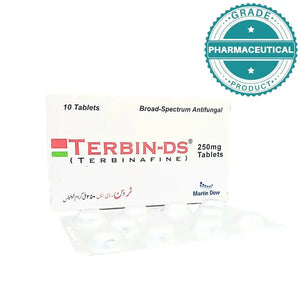

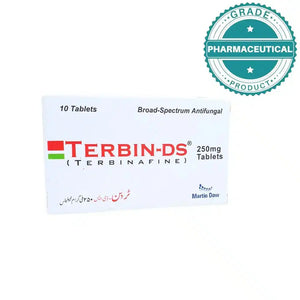
TERBIN-DS TABLETS (Terbinafine HCI BP. Eq. To Terbinafine 250mg, Broad Spectrum Antifungal, A Product of Martin Dow) Each Pak Contains 10 Tablets
Terbin and Terbin DS tablets are potent antifungal medications effective against various fungal infections, including nail and skin conditions
Terbinafine interferes with fungal sterol biosynthesis, leading to the death of fungal cells. It is fungicidal against dermatophytes and molds
These tablets are indicated for onychomycosis, a common fungal nail infection, providing an effective solution for this challenging condition
In general, Terbin is well tolerated, with common side effects such as skin reactions and gastrointestinal symptoms. Serious adverse effects are rare
Terbin should be used cautiously in patients with liver or kidney issues, and close monitoring is recommended. Pregnant and breastfeeding women should avoid its use

Pay in 3 Installments of
Rs.
230


TERBIN-DS TABLET (terbinafine) are allylamines with
broad-spectrum antifungal properties. Terbinafine's chemical name is N(6,6dimethyl2hepten4inyl)Nmethyl1naphthalene
methylamine, with a molecular mass of 327.90
Terbin and Terbin DS tablets are indicated for the treatment
of:
Symptoms of overdosage may include headache, nausea,
epigastric pain, and dizziness. Treatment involves drug elimination, activated
charcoal administration, and symptomatic supportive therapy
Common adverse effects include skin reactions,
gastrointestinal symptoms, headache, fatigue, and taste disturbances. Uncommon
effects may include paresthesia, while rare effects involve hepatobiliary
reactions, blood dyscrasias, and more
Check the expiry date on the packaging
Follow these guidelines for the correct usage of TERBIN 250mg DS Tablets:
Always follow your doctor’s prescribed instructions for the best results.
TERBIN (Terbinafine) is an oral antifungal medication used to treat various fungal infections such as onychomycosis (fungal nail infection), tinea capitis (scalp infections), and other dermatophyte infections including tinea corporis, tinea cruris, tinea pedis, and yeast infections like Candida albicans.
Terbinafine works by inhibiting the synthesis of ergosterol, a critical component of fungal cell membranes. This interference leads to fungal cell death, making Terbin a fungicidal agent effective against dermatophytes, molds, and certain yeasts.
The typical dosage for TERBIN tablets is 250mg once daily for adults. For onychomycosis (fungal nail infections), treatment may last up to 6 weeks, while for other skin infections like tinea, the duration may range from 2 to 4 weeks. Always follow your healthcare provider’s prescribed dosage and treatment duration.
Common side effects include gastrointestinal disturbances (nausea, abdominal pain), headaches, fatigue, and taste disturbances. Rare side effects may include hepatobiliary reactions, blood dyscrasias, and visual disturbances. If you experience unusual symptoms, contact your healthcare provider immediately.
Terbinafine should be avoided during pregnancy as it may pose risks to the fetus. It is also excreted in breast milk, so it should not be used while breastfeeding. Always consult your doctor before using Terbin if you are pregnant or breastfeeding.


